
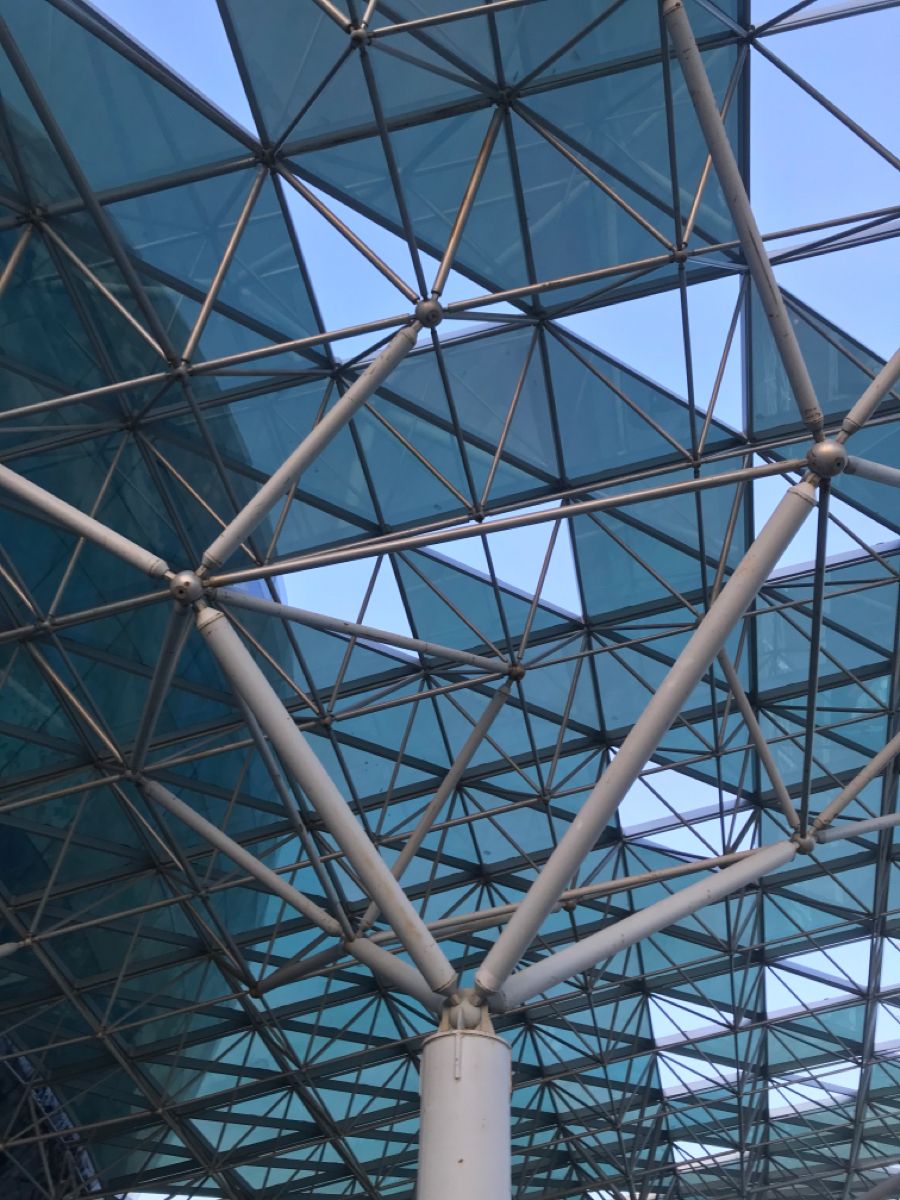
Cable-Net Roof Systems
Cable-net roof systems are highly specialized structural systems that use networks of tensioned cables to
support roof surfaces over very large areas. Unlike conventional steel framing, cable structures rely
primarily on tensile forces rather than bending resistance, allowing them to achieve extremely large spans
with relatively lightweight structural systems. These systems are typically used for major architectural and
public facilities where large unobstructed spaces are required. Their behavior is significantly different from
conventional structures because cables cannot resist compression and undergo changes in geometry as
loading conditions vary.
Engineering cable-net roofs requires advanced structural analysis techniques, including nonlinear modeling, tension optimization, and evaluation of large structural movements. Our capabilities include assessing:
Engineering cable-net roofs requires advanced structural analysis techniques, including nonlinear modeling, tension optimization, and evaluation of large structural movements. Our capabilities include assessing:
* Cable force distribution
* Pre-tensioning requirements
* Structural stability
* Pre-tensioning requirements
* Structural stability
* Wind response
* Load redistribution
* Support structure interaction
* Load redistribution
* Support structure interaction
Cable-net systems require careful consideration of both structural performance and construction
methodology. The installation sequence, tensioning process, and final geometry all influence the behavior
of the completed roof. Our engineering approach considers these factors to develop reliable and
predictable structural solutions.
